

Complete Guide to Glow Up Lab: Sourcing Research Peptides in Australia (2026)
Can your laboratory truly rely on the purity of a research compound when the batch testing documentation remains inaccessible? Within the Australian research sector, the challenge isn't just finding specific sequences like Tirzepatide or Selank; it's securing them from a source that prioritises procedural integrity over marketing claims. You likely recognise that the validity of your data hinges on the chemical stability and verified concentration of the materials you use. Sourcing sensitive compounds often involves navigating a landscape of opaque testing standards and unpredictable international shipping delays.
This Complete guide to Glow Up Lab serves as a technical roadmap for sourcing high-purity peptides domestically. We'll provide a transparent look at the professional catalogue, including 20mg and 30mg Tirzepatide specifications, and detail the HPLC and COA verification protocols that define their quality assurance. We also examine the logistics of nationwide laboratory supply to ensure your compounds remain stable during transit. By the end of this walkthrough, you'll have a clear understanding of how to manage your laboratory procurement with precision and peace of mind.
Key Takeaways
- This complete guide to Glow Up Lab details the 2026 catalogue of high-purity research compounds, including metabolic sequences like Tirzepatide and specialised neuropeptides.
- Learn how to access and interpret High-Performance Liquid Chromatography (HPLC) and Mass Spectrometry reports to verify the purity and molecular identity of every batch.
- Understand the technical requirements for reconstitution using sterile BAC Water to ensure compound stability and precise concentration during laboratory studies.
- Discover how domestic procurement and secure nationwide shipping eliminate the risks associated with international customs and protect the integrity of sensitive research materials.
Understanding Glow Up Lab’s Role in Australian Research
Glow Up Lab operates as a specialised facilitator for the Australian scientific community. It focuses on the distribution of high-purity research peptides, filling a critical gap for domestic laboratories that require consistent access to metabolic and neurological compounds. By maintaining a local presence, the entity ensures that research continuity isn't compromised by the logistical hurdles often associated with international procurement. The mission is grounded in procedural integrity, providing the necessary documentation for researchers to conduct their studies with confidence. This Complete guide to Glow Up Lab clarifies the operational framework that supports local science.
The "Research Use Only" Mandate
Compliance is the foundation of the supply chain. Every item in the catalogue is strictly classified as Research Use Only (RUO). This designation establishes clear boundaries, as these compounds are intended solely for laboratory environments and animal-based research frameworks. Glow Up Lab enforces a rigorous non-human consumption policy to ensure all activities remain within legal and ethical research parameters. This stance aligns with Australian regulatory standards and protects the integrity of both the supplier and the purchasing institution. It's essential for private labs and academic researchers to recognise that these materials are not therapeutic goods, but tools for discovery.
Transparency as a Core Pillar
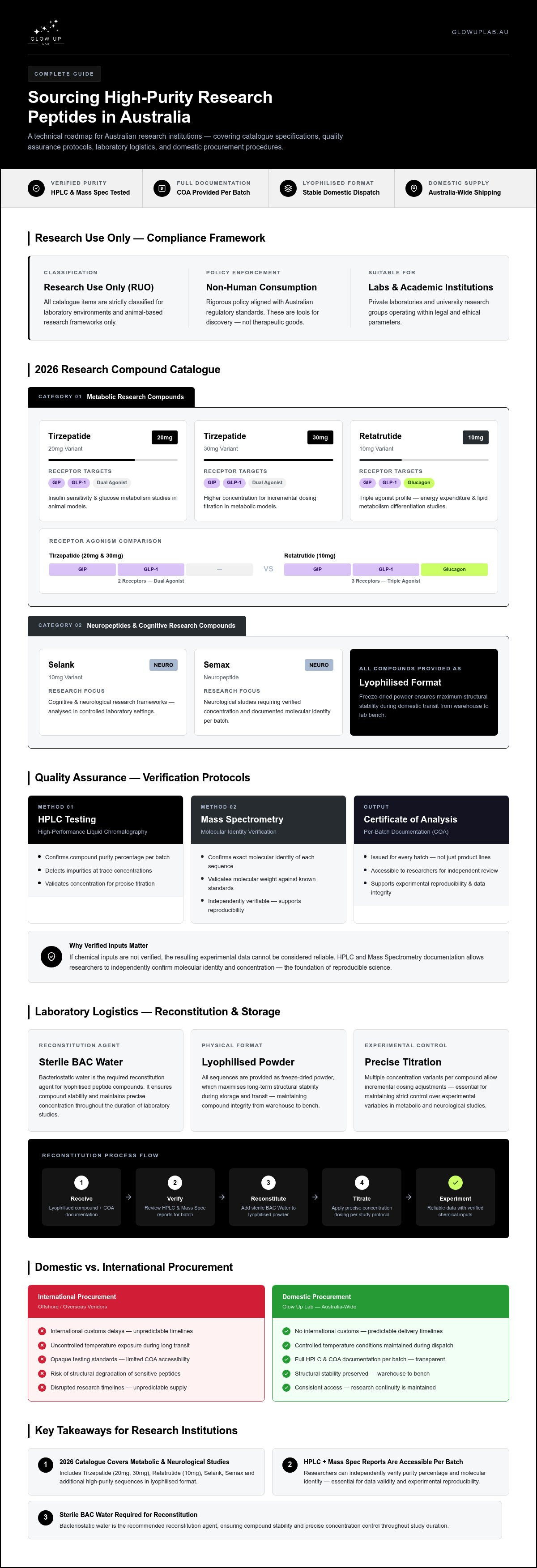
Historically, sourcing peptides in Australia involved dealing with opaque offshore vendors. This Complete guide to Glow Up Lab highlights a shift toward verifiable domestic supply. Transparency isn't just a goal; it's a procedural requirement. Every batch of research materials, such as Tirzepatide (20mg) or Selank, is accompanied by detailed analytical reports. Purity levels are verified through High-Performance Liquid Chromatography (HPLC) and Mass Spectrometry. These reports allow researchers to independently confirm the molecular identity and concentration of their supplies. Access to such documentation is vital for experimental reproducibility. If the chemical inputs aren't verified, the resulting data cannot be considered reliable. By providing these certificates of analysis (COA) for all sequences, the lab supports a higher standard of scientific inquiry within Australia. Domestic dispatch further secures this process. It eliminates the risks associated with international customs, such as long-term storage in uncontrolled temperatures, ensuring the structural stability of sensitive peptides is maintained from the warehouse to the laboratory bench.
Exploring the 2026 Research Compound Catalogue
The 2026 catalogue is structured to facilitate advanced metabolic and neurological studies with high-purity sequences. Within this Complete guide to Glow Up Lab, we examine the specific formats provided for precise laboratory titration. Researchers require compounds that allow for incremental dosing adjustments, which is why the catalogue offers various concentrations. Maintaining the structural integrity of these peptides is paramount, and each sequence is provided in a lyophilised format to ensure long-term stability during domestic transit. This methodical approach to supply ensures that researchers can maintain strict control over their experimental variables.
Metabolic Research: Tirzepatide and Retatrutide
Metabolic research often focuses on the synergistic effects of multi-receptor agonism. The catalogue provides Tirzepatide 20mg and 30mg variants to support studies into dual GIP and GLP-1 receptor pathways. These concentrations are specifically designed for laboratories investigating insulin sensitivity and glucose metabolism in animal models. For researchers exploring more complex interactions, Retatrutide 10mg offers a triple agonist profile. It targets GIP, GLP-1, and Glucagon receptors simultaneously. Analysing these interactions in a controlled environment requires high-purity inputs to ensure that observed data reflects the compound's actual biochemical activity. Researchers often study how triple agonism influences energy expenditure and lipid metabolism differently than dual agonists. Sourcing these sequences domestically ensures that the research timeline remains predictable and the materials remain uncompromised.
Neuropeptides: Selank and Semax
Cognitive and neurological research frameworks utilise specific neuropeptide chains to investigate neuroprotective and anxiolytic pathways. Selank 10mg is frequently used in studies targeting anxiety-related behaviours and regulatory peptide metabolism. Similarly, Semax 10mg serves as a key tool for neuroprotective research, particularly in studies involving brain-derived neurotrophic factor (BDNF) expression. These neuropeptides are highly sensitive to environmental factors. Researchers must adhere to strict handling requirements, including temperature-controlled storage and gentle reconstitution techniques, to prevent the delicate peptide chains from breaking down. You can view the full technical specifications for these sequences in the professional research catalogue.
Effective compound reconstitution is the final step in preparing these materials for study. This process requires high-grade BAC Water 10mL to maintain the sterility and pH balance of the solution. Using sub-standard solvents can compromise the molecular identity of the research compounds. By sourcing all necessary materials from a centralised Australian provider, laboratories don't have to worry about the inconsistencies of international transit. This Complete guide to Glow Up Lab aims to simplify the procurement process so that scientific focus remains on the data rather than supply logistics.
Quality Assurance: HPLC Testing and Purity Verification
Reliable research outcomes require more than just the correct peptide sequence; they demand chemical absolute. This Complete guide to Glow Up Lab emphasises that every batch in the catalogue undergoes rigorous High-Performance Liquid Chromatography (HPLC) testing. This analytical technique separates the components of a mixture to identify and quantify each substance. By utilising HPLC, the laboratory ensures that the peptide concentration is accurate and that any potential impurities are identified. Mass Spectrometry is employed alongside this to confirm the molecular identity of each compound, verifying that the structure matches the theoretical standard exactly.
Third-party independent testing remains a non-negotiable standard for the organisation. Internal testing alone cannot provide the level of objective verification required for high-stakes laboratory research. Maintaining a purity level of 99% or higher is the benchmark. Even minute traces of contaminants can introduce uncontrolled variables into a study, potentially compromising months of data. High-purity compounds ensure that any observed biological response is directly attributable to the peptide being studied, rather than an unintended chemical byproduct.
How to Read a Certificate of Analysis (COA)
Interpreting a COA is a vital skill for any researcher. Start by identifying the batch number and the date of manufacture, which should correspond directly with the vial in your laboratory. The HPLC chromatogram is the most critical visual component. It displays a primary peak representing the peptide; the area under this peak indicates the purity percentage. A single, sharp peak with minimal baseline noise signifies a high-quality sample. Additionally, the report will list the molecular mass. Comparing this value against the known theoretical mass of the sequence, such as Tirzepatide (20mg), confirms that the correct compound has been synthesised without structural errors.
Batch Transparency Protocols
This Complete guide to Glow Up Lab highlights the importance of a clear chain of custody. Each compound is tracked from synthesis to domestic dispatch, ensuring that storage conditions remain optimal throughout the process. Researchers can request detailed HPLC reports for their specific orders to maintain comprehensive records for their experimental logs. Such transparency supports experimental validity by ensuring consistent batch-to-batch quality. When a laboratory transitions from one batch to the next, the availability of these reports allows for a seamless continuation of study without the risk of unverified chemical variance. This methodical approach to documentation reflects a commitment to supporting the Australian scientific community with professional-grade materials.
Laboratory Logistics: Reconstitution and Storage
Handling research peptides requires a methodical approach to maintain molecular stability and ensure experimental accuracy. This Complete guide to Glow Up Lab outlines the logistical steps necessary for preparing compounds such as Tirzepatide (30mg) for study. The first step involves calculating the required concentration based on specific research parameters. Researchers must determine the exact volume of solvent needed to reach the target milligrams per millilitre for their specific titration needs. Precision at this stage is vital for the reproducibility of the data.
The second step is the physical reconstitution of the lyophilised powder using sterile, high-grade BAC Water 10mL. Maintaining an aseptic environment during this mixing process is mandatory. All surfaces and vial stoppers must be disinfected with alcohol to prevent contamination. When introducing the solvent, it's essential to let the liquid flow slowly down the side of the vial. Shaking the vial is prohibited; instead, a gentle swirling motion should be used. Shaking can introduce mechanical stress that shears the delicate peptide bonds, potentially degrading the compound before the study begins.
The Role of Bacteriostatic Water
Selecting the correct solvent is a fundamental safety protocol in any Australian laboratory. BAC Water 3mL contains a 0.9% benzyl alcohol solution, which serves as a preservative to inhibit microbial growth. This is particularly critical when dealing with multi-use vials, as it prevents the proliferation of bacteria that could compromise the research. Standard operating procedures for handling sterile solvents must be followed to ensure the preservative remains effective. It's also important to note the shelf-life differences; while lyophilised compounds are stable for extended periods in deep-freeze conditions, reconstituted peptides have a limited window of stability and should be prioritised for immediate use within the study schedule.
Storage and Temperature Sensitivity
Peptide integrity is highly susceptible to environmental factors, specifically UV light and temperature fluctuations. Best practices for laboratory storage include keeping vials in a refrigerator at 2°C to 8°C for short-term research or a freezer at -20°C for long-term preservation. Exposure to heat can lead to rapid degradation of the peptide chain. Researchers should also minimise the frequency of temperature changes by avoiding unnecessary removal of vials from cold storage. By following these storage protocols, laboratories ensure that the chemical structure of the compounds remains intact throughout the duration of the experiment. To ensure your laboratory is equipped for these procedures, you can procure sterile reconstitution supplies to maintain your research continuity.
Procurement Protocol for Australian Institutions
Efficient procurement is essential for maintaining the momentum of scientific discovery. This Complete guide to Glow Up Lab clarifies the final stage of the procurement cycle, focusing on how Australian institutions can secure high-purity compounds through a streamlined e-commerce framework. The platform is designed to mirror professional laboratory supply standards, offering a functional interface for selecting sequences such as Tirzepatide (30mg) or Retatrutide (20mg). Security remains a priority; the system utilises encrypted payment gateways and rigorous data protection protocols to meet the compliance requirements of academic and private research entities.
Nationwide Shipping and Secure Delivery
Domestic sourcing provides a significant advantage by eliminating the volatility of international border controls. When researchers order from overseas, they often face customs seizures or extended delays that compromise the structural integrity of sensitive peptides. Glow Up Lab bypasses these hurdles through a dedicated domestic supply chain. Every order includes tracked nationwide shipping, ensuring that materials move quickly from the warehouse to the laboratory bench. Packaging standards are strictly controlled to maintain compound stability. Vials are secured in protective, temperature-resilient housing to prevent degradation from mechanical stress or environmental exposure during transit. This reliability allows laboratories to plan their experimental schedules with a high degree of certainty.
Managing Laboratory Accounts
Large-scale research projects require robust account management tools to handle bulk orders and maintain audit compliance. The platform allows procurement officers to organise repeat orders and access a comprehensive order history. This feature is particularly useful for institutional audits, as it provides a centralised repository for all procurement documentation and associated batch reports. If technical enquiries arise, researchers have access to Australian-based support. Having a direct line to a local facilitator who understands the specific nuances of the Australian research landscape is invaluable. Whether you're verifying the specifications of Cagrilintide (10mg) or requesting specific batch data, the support team provides professional, technical assistance without the delays of international time zones.
The Glow Up Lab advantage is built on three pillars: purity, transparency, and reliability. By providing HPLC-verified compounds through a secure domestic logistics network, the entity serves as a professional partner for the Australian scientific community. This Complete guide to Glow Up Lab has detailed the necessary protocols to ensure your laboratory procurement is both compliant and efficient. Researchers can move forward with their studies, confident that their chemical inputs meet the highest standards of procedural integrity.
Advancing Australian Research with Procedural Integrity
Sourcing high-purity peptides domestically is a foundational requirement for modern laboratory studies. This Complete guide to Glow Up Lab has outlined the essential protocols for verifying chemical identity and managing the logistics of sensitive research compounds. By prioritising clinical transparency and HPLC verified purity, researchers can eliminate the variables associated with unverified offshore supply. Secure Australian dispatch ensures that materials reach your laboratory without the risks of international customs delays or uncontrolled temperature exposure. It's vital to maintain these standards throughout the reconstitution and storage process to protect the integrity of your sequences and the validity of your final data.
As the Australian research landscape evolves, having a reliable domestic partner for documented materials remains a strategic advantage for any institution. You can now Browse the Glow Up Lab Research Catalogue to secure verified compounds for your upcoming studies. We look forward to supporting your next phase of scientific discovery with professional-grade materials and dependable logistics.
Frequently Asked Questions
Are Glow Up Lab products suitable for human use?
No, these products are not for human use. Glow Up Lab strictly classifies its entire catalogue as Research Use Only (RUO). This means the compounds are intended solely for laboratory experiments and animal-based research studies. They are not therapeutic goods or medical prescriptions. Researchers must adhere to these compliance standards to maintain the integrity of their work and ensure they're operating within legal Australian research parameters.
How can I verify the purity of a specific peptide batch?
Purity is verified through High-Performance Liquid Chromatography (HPLC) and Mass Spectrometry testing for every batch. These analytical reports confirm the molecular identity and concentration of the compound. Researchers can access these documents to ensure the chemical inputs meet the required 99% purity benchmark. This level of verification is essential for experimental reproducibility and avoiding unintended variables caused by chemical impurities in the laboratory environment.
Does Glow Up Lab ship to regional areas in Australia?
Yes, the service provides secure nationwide shipping across the entirety of Australia. This includes delivery to regional and remote laboratory facilities. By utilising a domestic supply chain, the organisation ensures that researchers outside major metropolitan areas can access high-purity compounds without the risks of international customs delays. All orders are tracked to provide transparency and peace of mind during the transit of sensitive research materials.
What is the standard lead time for nationwide delivery?
Domestic shipping typically offers significantly shorter lead times compared to international procurement. While specific delivery durations can vary based on the destination's distance from the dispatch centre, the use of local logistics avoids the unpredictable delays often encountered at the Australian border. This domestic efficiency allows laboratories to maintain consistent research schedules. Secure packaging protocols are also utilised to ensure the structural stability of the peptides throughout the journey.
What is the difference between Tirzepatide 20mg and 30mg for research?
The primary difference lies in the total mass of the active compound per vial. Tirzepatide 20mg and 30mg variants allow researchers to choose the concentration that best fits their specific titration protocols. A higher mass vial may be more efficient for large-scale studies or experiments requiring higher concentrations. Both formats are provided in a lyophilised state to ensure stability, requiring reconstitution with a sterile solvent before the research begins.
Why is BAC water required for peptide reconstitution?
Bacteriostatic Water is required because it contains 0.9% benzyl alcohol, which acts as a preservative. This additive is essential for preventing microbial growth and bacterial proliferation within the vial after the seal has been breached. Using sterile BAC Water ensures that the peptide solution remains stable for the duration of the study. It's a standard laboratory requirement for any multi-use research compound to maintain aseptic conditions and protect experimental data.
How should I store lyophilised peptides before use?
Lyophilised peptides should be stored in a temperature-controlled environment to prevent degradation. For short-term needs, a laboratory refrigerator at 2°C to 8°C is sufficient. For long-term preservation, vials should be kept in a freezer at -20°C. It's also important to protect the compounds from direct UV light exposure and minimise mechanical stress. Following these storage protocols ensures that the peptide chains remain intact and ready for reconstitution when the study commences.
Can I request a Certificate of Analysis (COA) for my order?
Yes, researchers can request a Certificate of Analysis (COA) for any specific batch they order. Transparency is a core pillar of the service, and providing batch-specific HPLC data is standard practice. This Complete guide to Glow Up Lab highlights that having access to such documentation is vital for audit compliance and experimental validity. Providing these reports ensures that every institution has the necessary data to verify the purity and molecular mass of their research materials.